

Dog Daycare for Wilmington Remote Workers
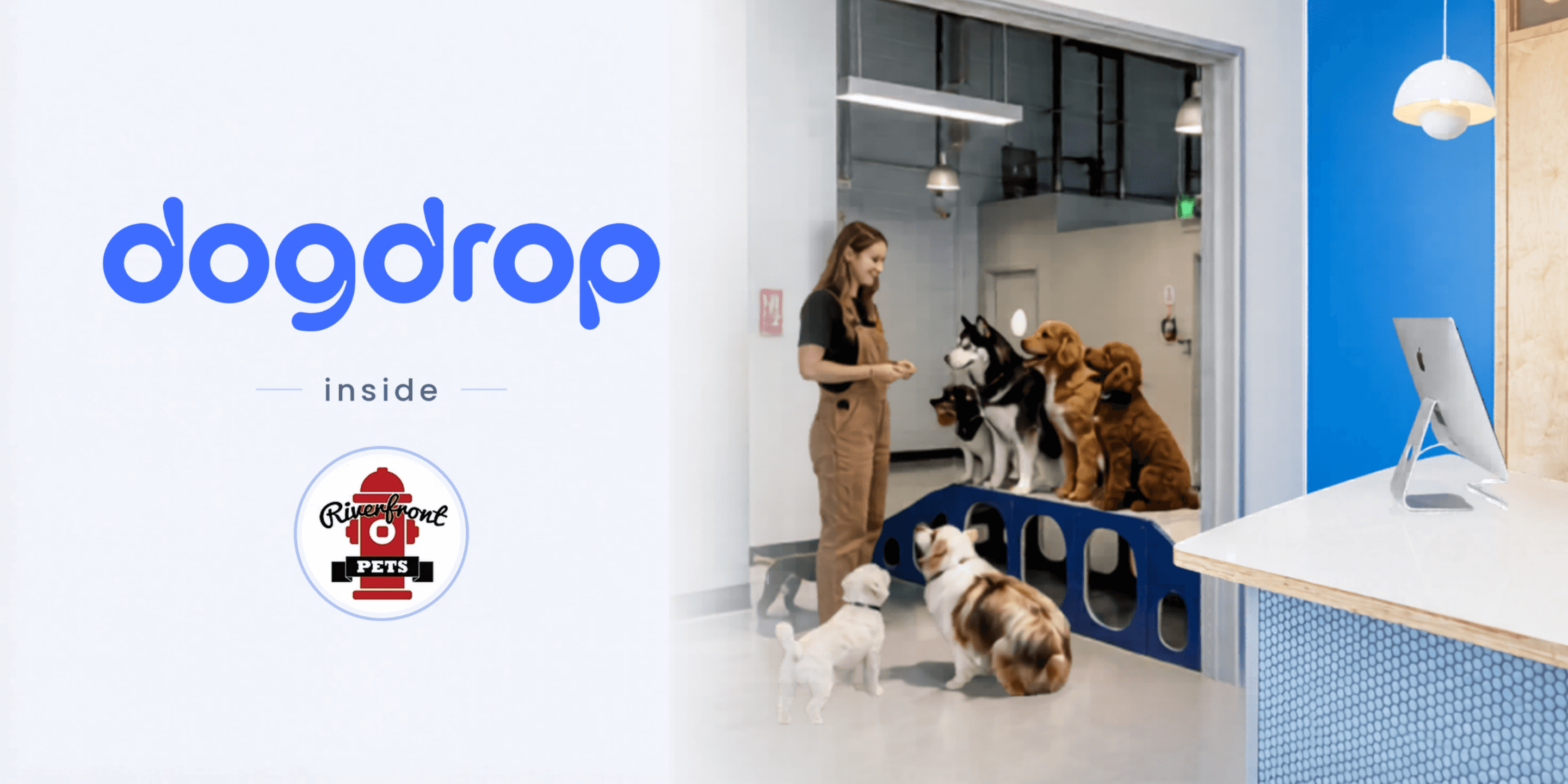
The remote work shift changed Wilmington's dog daycare market more than anyone acknowledges.
The old pattern: people commuted to Philadelphia, New York, or New Castle 5 days a week. Their dog was at daycare 5 days a week. Full-day rates, predictable, easy.
The new pattern: 2-3 days in-office, 2-3 days remote, meetings that pop up, a 4-hour deep-work block that requires silence, a 2 p.m. client call that your dog will definitely interrupt. The week isn't symmetrical. Nobody needs their dog in daycare from 7 to 7 on a Tuesday when they're doing Slack from their kitchen table.
We built Dogdrop's pricing model for exactly this week.
Why hourly pricing fits remote workers
$15 per hour, in 30-minute increments. Three hours? You pay for three hours. Ninety minutes? Ninety minutes. No "day rate," no half-day minimum, no full-day flat fee whether your dog is with us for 2 hours or 11.
This changes the math on partial-day daycare usage:
Deep-work mornings: Drop at 9, pick up at 1. Four hours = $60.
Client meeting blocks: Drop at 10, pick up at 3. Five hours = $75.
Occasional meeting days: Drop at 1, pick up at 5. Four hours = $60.
Tuesday/Thursday office days: Drop at 8, pick up at 5. Nine hours = $135.
For frequent partial-day use, a Dogdrop membership still makes sense — Starter is $65/month for 10 hours of care.
Why the location works for remote
Dogdrop Riverfront is at 311 Justison Street, on the Wilmington Riverfront. We're walking distance from several of the best coffee shops and coworking-adjacent spaces in Wilmington:
Starbucks Riverfront Market — reliable WiFi, outdoor tables, dog-friendly
Cosi on the Riverfront — bigger footprint, good for meetings
Iron Hill Brewery — afternoon coworking plus beer, dogs allowed on the patio
Big Fish Grill — lunch meeting spot with Riverfront views
Drop your dog, grab a coffee, set up at a Riverwalk table, and do your deep-work block with your dog getting enrichment three blocks away. Pick up midday, take your dog for a Riverwalk walk, head back to your apartment for afternoon meetings.
This is the remote work / dog parent rhythm that Wilmington genuinely enables better than most cities.
Scenarios where Dogdrop makes the biggest difference
The Zoom-heavy consultant. You have 4-6 Zoom meetings most days. Your dog barks at every delivery person. Your meetings are interrupted. Your clients are patient but it's getting embarrassing.
Drop your dog at 9 for the meeting block, pick up at 2 or 3. Cost: $60-$90 per day.
The writer who needs silence. Deep-work sessions require uninterrupted 3-4 hour blocks. Your dog requires interaction every 30 minutes. Drop for the deep block, pick up when you're done.
The hybrid worker with unpredictable in-office days. Some weeks you're in the office 3 days. Some weeks 1. Your employer doesn't announce in-office days in advance.
No appointment-based daycare works for this. Dogdrop does — just come by whenever you need us.
The remote worker with out-of-town travel. Remote workers travel more than people assume. 2-3 day trips to NYC, Philly, D.C. for in-person meetings or conferences.
Hourly pricing plus the Amtrak station being two blocks away = the perfect combination. Drop at 7, train at 7:13, back at 7 p.m. Pick up.
Setting up your remote-work daycare routine
Week 1: Book the free Good Fit Test. Find out which zone your dog thrives in.
Week 2: Try a half-day drop during a real work block. See if the day goes better for both of you.
Week 3: Try two drops — one deep-work morning, one meeting block. Calibrate the pattern.
Week 4: If the rhythm is working, decide: stay hourly, or move to a Starter membership ($65/month for 10 hours).
The coffee shop + Dogdrop combo
A few Wilmington remote workers have built a routine that looks like this:
8:45 a.m. — drop at Dogdrop
8:50 a.m. — walk to Cosi or Starbucks on the Riverwalk
9:00 a.m. – 12:00 p.m. — deep work block with the Riverfront as backdrop
12:00 – 12:30 — pick up at Dogdrop, walk the Riverwalk, home
1:00 – 4:30 — afternoon meetings from home with a freshly-tired dog sleeping at your feet
That's 3 hours at Dogdrop = $45 + the cost of coffee. Cheaper than most coworking day passes and more productive than trying to deep-work from a home office with a bored dog.— which, back in 2019 in Los Angeles, was a disaster that eventually became the business we now run.
Here's the practical preparation guide.
2 weeks before: vaccination check
Every daycare requires current vaccines. At Dogdrop, we require:
Rabies — required annually or every 3 years depending on the vaccine type
DHPP (or DAP, depending on the vet) — the standard puppy/adult combination
Bordetella — kennel cough prevention, required every 6-12 months
Call your vet 2 weeks before your planned first visit. Ask them to email vaccination records to riverfront@dogdrop.co directly, or hand them to you in a PDF.
Age requirement: Dogs must be at least 4 months old and have completed their first full series of puppy shots.
1 week before: behavior baseline
Take a week to honestly assess your dog's current behavior:
Do they react to other dogs on walks? Lunging, barking, fixating — or calm pass-bys?
Have they met other dogs in the past 6 months?
Can they settle in new environments?
How do they handle being left alone?
If you're noticing consistent reactivity, severe anxiety, or aggressive behavior — those are things to discuss with our team before the Good Fit Test. Email us at riverfront@dogdrop.co with your observations.
3 days before: gear check
You'll need minimal gear:
Properly-fitted harness or collar. Not a prong. Not a choke chain.
Leash. Standard 4-6 foot. No retractable leashes at Dogdrop.
Vaccination records. Printed or digital.
Treats they like. Optional but helpful.
A toy that smells like home. Optional.
1 day before: logistics
Book the Good Fit Test at dogdrop.co/locations/wilmington-riverfront. Pick a time. Morning weekday is typically easiest.
Feed normally. Don't skip breakfast — a hungry dog isn't going to behave like themselves.
Walk them first. A 20-30 minute walk before arrival takes the edge off any morning energy.
Day-of: the arrival
Arrive on time. Good Fit Tests are scheduled for a reason.
Curbside drop-off. Pull up to 311 Justison. A staff member meets you at the door. You'll come inside for the first 15-20 minutes, then you leave.
Be calm. Your dog reads your energy. If you're anxious, they'll pick it up.
Leave without ceremony. When the staff says it's time to go, go. Don't linger. That amps up separation anxiety.
During the Good Fit Test (you're out of the building)
The Good Fit Test runs 1-2 hours. We're observing how your dog enters the space, how they interact with the staff, how they interact with other dogs, which zone seems like the right fit, and any red flags.
Go do something. Run errands. Get coffee. Don't sit in your car worrying.
After the test: what we tell you
Within 24 hours, you'll get one of three outcomes:
Cleared for daycare. Your dog is a great fit. Walk in anytime starting now.
Cleared with a plan. Your dog fits but there's a specific thing to work around — maybe a shorter first week to build stamina.
Not a good fit. Honestly, sometimes. We'll tell you specifically why and what alternatives might work better.
After the first paid visit
First week: keep visits short (3-5 hours) to build up to longer stays.
First month: look for exhausted-but-happy pickups. That's the signal the routine is working.
Tell us things we should know. If they're extra-shy on Mondays, if they respond well to a specific staff member, if they're scared of loud noises — the more we know, the better.
Common mistakes to avoid
Not doing the Good Fit Test. No exceptions. Every new dog.
Skipping vaccinations. No vaccines, no daycare.
Long emotional goodbyes. Amps up anxiety.
Assuming a failed Good Fit Test means your dog is "bad." It means open-play isn't right for this dog.
Expecting your dog to love it on Day 1. Some do. Most take a week or two to find their rhythm.